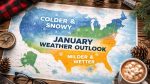
As the warmth of summer fades and cool winds begin to circulate, much of the United States starts preparing for the first signs of winter. The First Snowfall Forecast 2025–2026 offers an early glimpse into when and where the initial snowflakes of the season are likely to appear. For many, the first snow evokes images of festive lights, cozy evenings, and holiday cheer. Yet, for others, it marks the beginning of logistical challenges such as travel delays, icy roads, and adjustments to daily routines.
According to the latest Direct Weather outlook, this year’s forecast goes beyond predicting temperatures. It provides regional insights into snowfall timing and intensity, offering valuable information for families planning winter trips, agricultural sectors adjusting harvest timelines, and local administrations organizing road safety measures. Early snow predictions serve not just as weather updates but as planning tools that influence multiple aspects of community life.
Table of Contents
Preparing for Seasonal Transitions

Understanding when the first snow will fall is critical for effective preparation. Local authorities rely on these forecasts to coordinate snow-clearing operations, while homeowners begin stocking up on winter essentials. Municipalities also implement public safety advisories to reduce risks associated with frost and black ice.
For farmers, snowfall timing is particularly significant. Early snow can provide protective insulation for certain crops, while a delayed onset may extend harvesting opportunities. Meanwhile, winter sports facilities and tourism operators monitor these forecasts to determine the start of their operating season.
Role and Importance of Early Snowfall Forecasts
The first snowfall forecast plays an essential role in planning and public preparedness. It affects how communities organize everything from school schedules to transportation routes. For the recreation sector, especially in ski towns and mountainous regions, it signals the beginning of a crucial business season. For the energy sector, it allows utilities to anticipate demand surges as heating systems activate earlier in colder regions.

Moreover, accurate snowfall forecasting contributes to efficient disaster management. Timely alerts and weather preparedness campaigns enable residents, particularly those in high-risk areas, to minimize disruptions and respond effectively to early snow events.
Climatic Elements Influencing First Snow
The timing of the first snowfall depends on a combination of geographical, atmospheric, and climatic factors that vary across the country. Some of the most influential elements include:
- Elevation and Topography – Higher altitudes cool faster and are more likely to experience early snow accumulation.
- Latitude and Sunlight Loss – Northern regions experience a loss of daylight earlier in autumn, which accelerates temperature drops.
- Atmospheric Moisture Levels – Cold air must coincide with adequate humidity for snow crystals to form.
- Movement of Jet Streams and Cold Fronts – These determine whether precipitation appears as rain or snow.
- Global Climate Patterns – Events like El Niño–Southern Oscillation (ENSO) or Arctic oscillations significantly alter regional snow distribution.
Each of these factors interacts differently across regions, explaining why snowfall timing can vary widely even within neighboring states.
Regional Overview of Average Snowfall Onset

The 2025–2026 season displays diverse timelines across U.S. regions, based on historical data and Direct Weather projections. The following table summarizes the average first snowfall periods for major regions:
| Timeframe | Regions Most Likely to Receive First Snowfall |
|---|---|
| September 2025 | High peaks in Montana, Colorado, Wyoming, and Sierra Nevada |
| Early October 2025 | Parts of Utah, Idaho, and South Dakota begin to see flakes |
| Late October 2025 | Nevada, New Mexico, North Dakota, and the Upper Midwest |
| Early November 2025 | Great Lakes, Western Ranges, Northern Plains, and the Northeast |
| Late November 2025 | New England, Appalachians, Ohio Valley, and parts of the Midwest |
| December 2025 | Southern New England, Mid-Atlantic states, and Central Plains |
| January 2026 | Southern Plains and parts of the Southeast United States |
These estimates help various sectors, from transportation to agriculture, determine the timing of preventive measures before widespread snow accumulation begins.
Observed Shifts Compared to Recent Years
In comparing 2025–2026 snowfall expectations to previous seasons, certain deviations stand out. The Eastern Midwest appears to be heading for an earlier snowfall window, influenced by stronger cold fronts predicted for late October. Meanwhile, Western high-altitude zones such as the Rockies and Sierra Nevada maintain their trend of receiving early snow due to persistent low temperatures.
Conversely, lower-altitude western regions may experience a delay despite cooler conditions, primarily due to insufficient moisture content in the early part of the season. These evolving trends highlight how climate variations and local terrain dynamics continue to shape snow distribution patterns across the country.
Variability in Forecast Accuracy
While meteorological models are increasingly precise, snowfall timing remains inherently unpredictable. Shifts in storm patterns, moisture distribution, and temperature anomalies can quickly alter regional outcomes. For instance, a sudden warm front or unexpected storm deflection may cause snow to arrive later than predicted.
Localized effects, such as lake-effect snow near the Great Lakes or coastal air currents, can also produce stark differences in snowfall, even between closely situated towns. Thus, the first snowfall forecast provides a reliable framework but not an absolute prediction.
Regional Highlights from the 2025–2026 Outlook
Based on Direct Weather’s latest analysis issued in mid-September 2025, certain key regional highlights stand out. The Eastern and Midwestern regions of the United States are projected to experience snowfall earlier than average, beginning from late October to early November. In contrast, Western states at lower elevations, including portions of Arizona and Nevada, are expected to see their first flakes later, possibly by mid to late December.
The following table outlines regional forecast insights for 2025–2026:
| Region | Predicted Onset Period | General Observation |
|---|---|---|
| Eastern Midwest | Late October 2025 | Earlier snow compared to past years |
| Western Mountains | September–October 2025 | Typical early snowfall due to elevation |
| Central Plains | Late November–Early December 2025 | Consistent with historical averages |
| Southeast U.S. | January 2026 | Delayed snow due to warmer air masses |
These insights support logistical planning, allowing communities and industries to schedule operations, maintenance, and seasonal shifts with greater precision.
Factors That Could Shift the Forecast
Forecasts for early snow can change significantly as the season progresses. The most common influences include:
- Sudden Warm Spells – Temporary increases in temperature can delay initial snowfall.
- Dry Atmospheric Conditions – Insufficient humidity may reduce snow formation despite cold air.
- Shifting Jet Streams – Altered air movement patterns can redirect storm paths and change precipitation outcomes.
Such adjustments are a normal part of forecasting and highlight why continued monitoring remains essential throughout autumn and early winter.
Frequently Asked Questions:
1. When will most regions see their first snowfall?
The earliest snowfalls are anticipated in the mountainous West by late September, followed by the Midwest and Northeast between late October and November. Southern regions may not experience snow until January 2026.
2. Why is the first snowfall forecast important?
It enables farmers, travelers, and local administrations to prepare for the season by managing crops, travel schedules, and public safety measures.
3. Can the forecast change after release?
Yes. Changes in storm paths, temperature anomalies, and regional air pressure systems can cause snowfall to occur earlier or later than predicted.